The Story of Degenhart Glass Company
If you love tiny glass treasures, paperweights, or whimsical figurines, then chances are you have stumbled across the charming creations of Degenhart Crystal Art Glass. These colorful little gems have captured collectors’ hearts for decades! But where did they come from? Let’s step back in time and uncover the story behind this beloved glassmaker.
The Beginning of Degenhart Glass
The Degenhart Crystal Art Glass Company was founded in 1947 in Cambridge, Ohio by John and Elizabeth Degenhart, a husband-and-wife team deeply connected to the American glass industry.
John Degenhart was no stranger to molten glass. In fact, he began working in glass factories as a child and later worked at the well-known Cambridge Glass Company, where he refined his glassmaking skills. When the couple started their own company after World War II, they focused on producing small decorative novelty glass pieces rather than large tableware lines. These miniature treasures would soon become collector favorites.
What Did Degenhart Make?
Degenhart became known for producing small, detailed glass novelties in an incredible variety of colors.
Some of the most popular pieces include:
- Glass paperweights
- Salt cellars
- Toothpick holders
- Miniature figurines
- Glass animals
- Covered dishes
- Dog (“pooch”) figurines
- Glass shoes and slippers
- Owls and birds
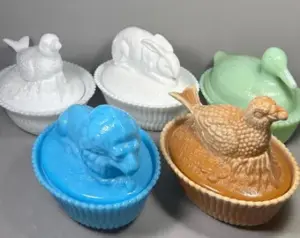
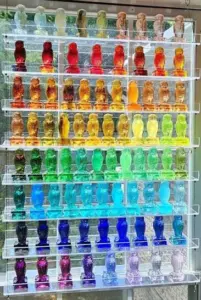
Collectors especially love the whimsical animal pieces and novelty molds. Over the years, the company produced over 145 different glass colors, making color collecting a major part of the hobby.
A Family Legacy
After John Degenhart passed away in 1964, his wife Elizabeth Degenhart took over the company and continued running the factory for many years.
Elizabeth was extremely active in promoting the glass and became known as the “First Lady of Glass” in Ohio collecting circles.
When Elizabeth died in 1978, the company’s molds and equipment were sold to Boyd’s Crystal Art Glass, which continued producing some of the designs for collectors.
How to Identify Degenhart Glass
Collectors often ask how to tell if a piece is truly Degenhart.
Here are some helpful clues:
Early Pieces (1947–1972)
- Often unmarked
- Sometimes stamped or labeled
- Mold seams can be slightly visible due to hand finishing
Later Pieces (After 1972)
- Marked with a “D” inside a heart logo
- Usually found on the base of the piece
Because many molds were later used by Boyd Glass, collectors often compare markings carefully.
Popular Degenhart Collectibles
Some of the most collected pieces include:
• Glass Owls
• Pooch (Scottie dog) figurines
• Glass slippers
• Robin covered dishes
• Turkey covered dishes
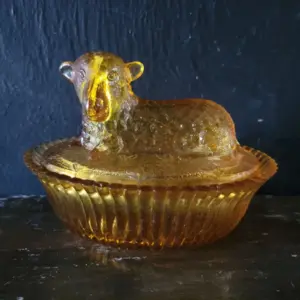
• Lamb covered dishes
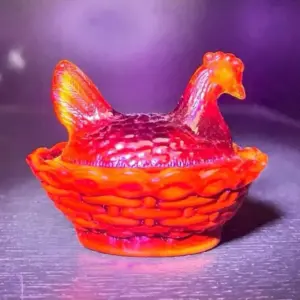
Many of these were made in slag glass, custard glass, milk glass, and carnival finishes, making color variations extremely collectible.
Rarity & Collector Values
Values depend heavily on color, rarity, and condition.
Typical collector ranges today:
Common small novelties
$10 – $40
Figurines or animal dishes
$25 – $100
Rare colors (custard slag, vaseline, unusual carnival finishes)
$75 – $300+
Unusual or limited pieces
$300+ depending on demand
Collectors often build complete color sets, which increases demand for unusual colors.
Why Collectors Love Degenhart
Degenhart glass represents the post-war American collectible boom, when small novelty glass pieces were popular souvenirs and gifts.
Collectors love them because they are:
✨ Colorful
✨ Small and display-friendly
✨ Available in many variations
✨ Affordable entry-level collectibles
For many collectors, these pieces were the gateway into the wider world of vintage glass collecting.
DID YOU KNOW? Fun Fact
Degenhart collectors sometimes try to assemble the same mold in every color produced—and since the company made over 145 colors, completing a full set is nearly impossible!