The Rarest Pyrex Patterns in the World (and Why Collectors Go Wild for Them!)
Step into a mid-century kitchen and you’ll find more than just casseroles… you’ll find history baked right into the glass. From Mother’s Day promotions to limited-run designs, Pyrex didn’t just make cookware—it created collectibles.
But here’s the twist…
👉 Not all Pyrex is created equal.
Some patterns are so rare, they’ve become the holy grails of the collecting world, fetching hundreds—even thousands—of dollars.
Let’s dive into the Top 5 Rarest Pyrex Pieces EVER made 👇
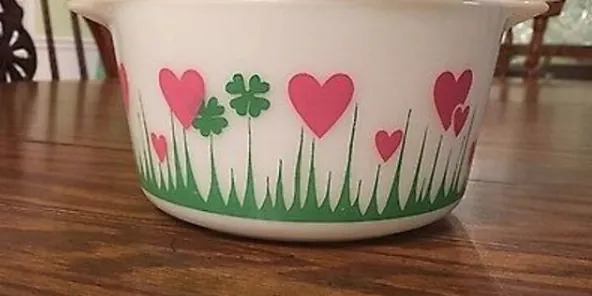
💚 1. “Lucky in Love” (1959)
💥 The Crown Jewel of Pyrex
- Features: Green hearts + pink clovers on white
- Production: Extremely limited promotional release 1959
- Pulled from shelves: Almost immediately after release
- Why it’s rare: Discontinued quickly—very few survived
- Value: Often $1,000–$4,000+
👉 This pattern is widely considered one of the rarest Pyrex designs ever produced and a true “holy grail” among collectors. (WKML 95.7)
👉 Unlike standard Pyrex patterns, Lucky in Love was never intended for long-term retail sale. It was part of a short-run promotional line, and Corning instructed retailers to remove unsold promotional items from store shelves once the promotion ended.
✨ What this means for collectors:
Many pieces were likely pulled, returned, or destroyed, which explains why so few examples exist today—and why it’s considered the ultimate Pyrex “holy grail.”
👉 Some collectors believe Lucky in Love may have been a test-market or experimental piece, meaning it may have never even reached full nationwide distribution—making surviving examples even more mysterious.
✨ Vintage Shack Insight: If you find one in the wild… RUN, don’t walk.
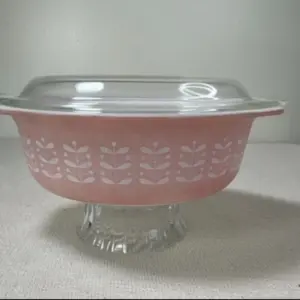
🌼 2. Pink Daisy (1956–1962)
🌸 One of the earliest printed Pyrex patterns
- One of the FIRST opal ware designs
- Released during the golden age of Pyrex innovation
- Highly sought after in complete sets
👉 Early Pyrex patterns like Pink Daisy helped launch the decorated Pyrex craze in the 1950s. (Pyrex)
💰 Value: $200–$800+ depending on condition and form
💛 3. Atomic Eyes (1950s)
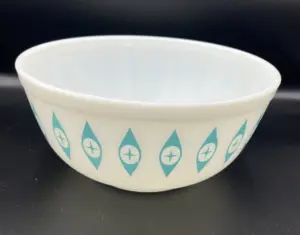
👁️ Mid-century modern dream
- One of the earliest Pyrex promotional designs
- Bold atomic pattern (VERY your vibe 😉)
👉 Produced in very limited quantities, often as promotional or gift items
💰 Value: $1,000–$3,000+
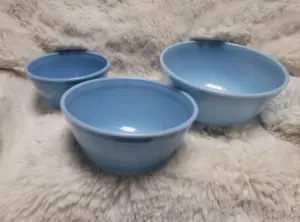
💙 4. Bluebelle Delphite (1960)
🔵 A dreamy blue classic
- Solid “Delphite” blue glass
- Often confused with more common turquoise
👉 Rare color variations and early production runs make these pieces highly collectible, with values reaching $3,000+ for pristine examples. (Mental Floss)
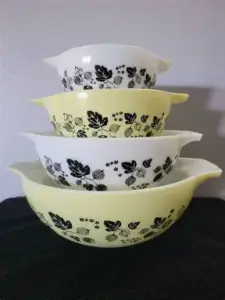
🖤 5. Black Gooseberry (Test Piece)
🕵️♀️ Collector mystery piece
- Gooseberry is common in pink
- Black version = test or experimental
👉 Believed to be factory test pieces or extremely limited runs
💰 Value: $1,000+ when they surface
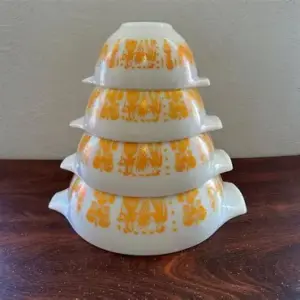
🧡 6. Butterprint (Orange / Promotional Variant)
🔥 NOT your everyday Amish print
- Standard Butterprint (turquoise/white) = common
- Orange or rare color test variants = extremely rare
👉 These were test colors or limited releases, never mass produced.
💰 Value: $800–$2,500+ depending on form
✨ Vintage Shack Tip: If it’s NOT blue or pink… take a second look.
___________________________________________________________________________
🧠 Starburst – Here’s Why It’s Actually Rare
💥 7. It Was a Promotional Piece (NOT a Full Pattern Line)
- Produced in the late 1950s (around 1958–1959)
- Most commonly found on:
- Space Saver casseroles
- Promotional gift sets
👉 It was never mass-produced across full kitchen lines like Gooseberry or Butterprint.
🚫 Limited Distribution
- Often tied to store promotions or special offers
- Not widely available nationwide
👉 That means fewer were made from the start.
💔 High Loss Rate Over Time
- Clear glass base + printed lid
- Lids were:
- Easily scratched
- Often separated or broken
👉 Surviving complete sets are MUCH harder to find.
🎯 Mid-Century Atomic Design Demand
- Bold “atomic eye/starburst” design
- Highly desirable in:
- MCM collectors
- Pyrex collectors
✨ Vintage Shack Insight: This pattern hits BOTH markets—which drives demand way up.
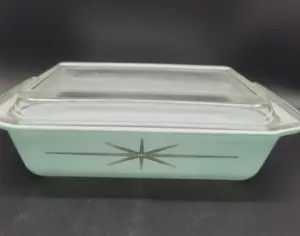
💰 Value Range (Realistic Collector Market)
- Lid only: $150–$400+
- Complete casserole: $300–$900+
- Mint / pristine examples: can exceed $1,000
⚠️ Why Some People Think It’s NOT Rare
Because:
- It shows up online just enough to seem obtainable
- It doesn’t always hit headline auction prices like Lucky in Love
👉 But in reality… it was never widely produced, which keeps it firmly in the rare promotional category.
___________________________________________________________________________________________
🧠 Why Are These Pyrex Pieces So Rare?
- Limited production runs (some were promotional only)
- Early designs from the 1950s launch era
- Color popularity (pink + turquoise dominate!)
- Condition sensitivity (chips & dishwasher damage reduce value) (WKML 95.7)
💰 Collector Tip from The Vintage Shack®
The real money is in:
✔ Complete sets
✔ Original lids
✔ Glossy, unworn finish
✔ Rare color variations
🌟 DID YOU KNOW?® Fun Fact
The decorated Pyrex patterns we obsess over today—like Gooseberry and Butterprint—were part of a major design shift in the late 1950s, when Pyrex moved from plain glass to colorful, printed opal ware that revolutionized American kitchens forever. (Pyrex)