The Story of Bischoff Glass Company: A Hidden Gem of American Art Glass
When collectors think of Mid-Century Modern American art glass, names such as Blenko, Viking, and Kanawha often come to mind. However, one remarkable West Virginia glass manufacturer quietly produced some of the most colorful and beautifully designed hand-blown glass of the twentieth century—Bischoff Glass Company.
Although the company never reached the national recognition of some of its competitors, Bischoff has become increasingly appreciated by collectors who recognize its quality, craftsmanship, and artistic designs.
A Brief History
The Bischoff family entered the glass industry during the early twentieth century in West Virginia, one of America’s most important glassmaking regions. Anthony F. Bischoff later established what became A.F. Bischoff Glass, Inc., and the business was incorporated in 1959. In 1964, the company officially changed its corporate name to Bischoff Glass Company. Operations were centered near Culloden, Cabell County, West Virginia, just outside Huntington.
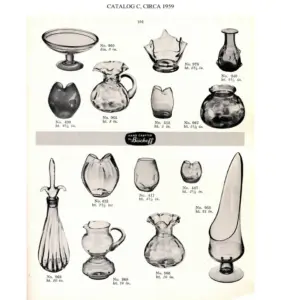
The company continued producing handmade art glass throughout the 1960s before eventually ceasing operations later in the decade. Much of its factory documentation has been lost, making surviving catalogs and original pieces especially valuable resources for collectors today.
Founder
The company was founded by Anthony F. Bischoff, an experienced West Virginia glassmaker who built the business around handcrafted decorative glass. Corporate records also list Lois Evelyn Bischoff as an incorporator of the company.
Location
Culloden, West Virginia (Cabell County)
West Virginia was once known as one of the glassmaking capitals of the United States, with hundreds of factories operating throughout the state during the twentieth century. Bischoff became part of this rich tradition alongside companies such as Blenko, Fenton, Pilgrim, Rainbow, and Kanawha Glass.
What Types of Glass Did Bischoff Produce?
Bischoff specialized in hand-blown decorative art glass, producing pieces that reflected the clean lines and vibrant colors popular during the Mid-Century Modern era.
Popular examples include:
- Tall swung vases
- Free-form bowls
- Sculptural pitchers
- Decanters
- Ashtrays
- Candleholders
- Centerpieces
- Stretch and pulled glass designs
- Colorful table accessories
Many pieces featured:
- Amber
- Tangerine
- Ruby
- Emerald green
- Aqua
- Cobalt blue
- Amethyst
- Smoke gray
Collectors frequently mistake Bischoff pieces for Blenko because both companies embraced bold modern forms and rich transparent colors.
Wayne Husted’s Influence
One fascinating chapter in Bischoff’s history came in 1963, when renowned Mid-Century designer Wayne Husted briefly designed glass for the company after leaving Blenko.
Several striking Bischoff lines—including the Concord collection—reflect Husted’s distinctive modern aesthetic with dramatic angles, sculptural silhouettes, and elegant simplicity.
Because of Husted’s involvement, certain Bischoff pieces have become especially desirable among Mid-Century Modern collectors.
Is Bischoff Glass Rare?
Yes.
Several factors contribute to its rarity:
- The company operated for a relatively short period.
- Production numbers were much lower than larger manufacturers.
- Many original catalogs were discarded.
- Factory records are scarce.
- Handmade pieces varied individually, making exact identification more challenging.
As collector interest in Mid-Century Modern design continues to grow, Bischoff glass has gained increased recognition for its craftsmanship and artistic appeal.
Current Collector Values
Values vary depending on size, color, condition, and whether a piece can be attributed to Wayne Husted.
Typical retail values include:
- Small bowls: $35–75
- Pitchers: $75–175
- Swung vases: $125–350+
- Large sculptural centerpiece pieces: $200–600+
- Rare Husted-designed examples: $500 or more when properly identified and in excellent condition.
Unusual colors, oversized forms, and documented catalog examples generally command the strongest prices.
Collecting Tips
When searching for Bischoff Glass, look for:
- Heavy hand-blown construction
- Ground and polished pontil marks
- Vibrant transparent colors
- Fluid Mid-Century Modern shapes
- Similar styling to Blenko—but often with distinctive Bischoff proportions and color combinations
Because many pieces remain unidentified in antique malls and estate sales, knowledgeable collectors occasionally discover exceptional bargains.
Fun Info:
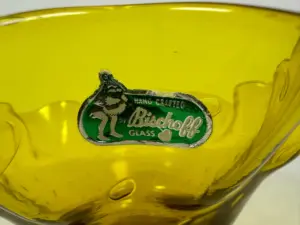
One of the most exciting aspects of collecting Bischoff Glass is that many sellers still mistakenly identify it as Blenko, Viking, or simply “Mid-Century Art Glass.” Since factory records are limited and original catalogs are relatively scarce, collectors who learn to recognize Bischoff’s distinctive forms and colors often uncover remarkable treasures before anyone else realizes what they have found.
Sometimes, the rarest collectible isn’t the most famous name—it’s the one that history almost forgot.
Sources
- West Virginia Secretary of State corporate records (A.F. Bischoff Glass / Bischoff Glass Company).
- Museum of American Glass in West Virginia, Bischoff Glass, 1920s–1960s monograph listing.
- Collector discussions and identification references documenting Wayne Husted’s work for Bischoff and typical identification characteristics.