
The History of Adrian Pearsall Lamps: Sculptural Light of Mid-Century Modern Design
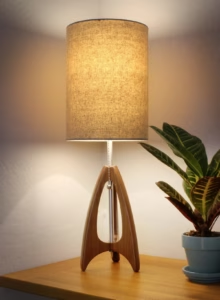
Adrian Pearsall is best known for his bold, sculptural furniture of the mid-20th century, but his lamps are equally striking—and increasingly collectible. With dramatic shapes, organic materials, and a strong connection to mid-century modern design, Adrian Pearsall lamps helped redefine lighting as functional art rather than simple utility.
Who Was Adrian Pearsall?
Adrian Pearsall (1925–2011) was an American furniture and lighting designer closely associated with the mid-century modern movement. He founded Craft Associates in Pennsylvania during the 1950s, a company that would become known for its daring designs and high-quality craftsmanship.
Trained in architectural engineering, Pearsall brought a structural and sculptural mindset to design. Rather than following minimalism strictly, he embraced dramatic forms that made a statement in a room.
The Rise of Craft Associates (1950s–1960s)
During the post–World War II boom, American homes were changing. Open floor plans and modern interiors called for furniture—and lighting—that felt new and expressive.
Craft Associates became one of the most influential design houses of the era. While Pearsall’s sofas and chairs often receive the most attention, his lamps and lighting designs were an essential part of his vision for cohesive interiors.
His lamps were not accessories—they were focal points.
Defining Features of Adrian Pearsall Lamps
Adrian Pearsall lamps stand out because of their bold scale and sculptural quality. Common characteristics include:
- Solid walnut or teak bases
- Abstract, architectural shapes
- Tall, dramatic silhouettes
- Handcrafted construction
- Minimal ornamentation with maximum presence
Many designs feel almost like wooden sculptures that happen to emit light. This approach aligned perfectly with mid-century modern values, blending nature, form, and function.
Popular Styles and Designs
Some of the most recognizable Adrian Pearsall lamps include:
Floor Lamps
- Tall, angular forms with wide stances
- Often paired with large drum or cone shades
- Designed to anchor a room visually
Table Lamps
- Heavy wooden bases with geometric or organic shapes
- Clean lines that highlight the natural grain of the wood
Sculptural and Abstract Lamps
- Asymmetrical designs
- Pieces that blur the line between furniture and art
These lamps were often designed to complement Pearsall’s seating and tables, creating a unified mid-century aesthetic.
Materials and Craftsmanship
Pearsall favored American hardwoods, especially walnut, which was prized during the mid-century era. The craftsmanship emphasized:
- Natural wood grain
- Solid construction
- Longevity and durability
Unlike mass-produced lighting, many Craft Associates lamps were made in limited quantities, contributing to their rarity today.
Collectibility and Value Today
Today, Adrian Pearsall lamps are highly sought after by collectors of mid-century modern design. Original pieces from Craft Associates can command high prices depending on:
- Condition
- Original shades and hardware
- Rarity of the design
- Provenance and authenticity
As appreciation for mid-century design continues to grow, Pearsall’s lighting designs have gained recognition alongside his furniture.
Legacy of Adrian Pearsall Lamps
Adrian Pearsall helped push lighting design beyond simple functionality. His lamps reflect a time when designers were willing to experiment with scale, form, and materials to create emotionally engaging spaces.
Today, Adrian Pearsall lamps remain timeless examples of mid-century modern artistry—pieces that illuminate not just rooms, but the history of American design.