
The History of Glass Insulators & Their Collectible Value
What Are Glass Insulators?
Before electricity powered our homes and before telephones connected our towns, glass insulators were quietly doing an essential job — preventing electrical currents from grounding out through wooden utility poles.
Beginning in the mid-1800s, glass insulators were mounted on wooden pins atop telegraph and telephone poles. Their purpose? To keep wires insulated from moisture and the wood itself, ensuring clear signal transmission across miles of countryside.
They were small, functional, and never meant to be decorative — yet today, they are one of the most colorful and addictive vintage collectibles on the market.

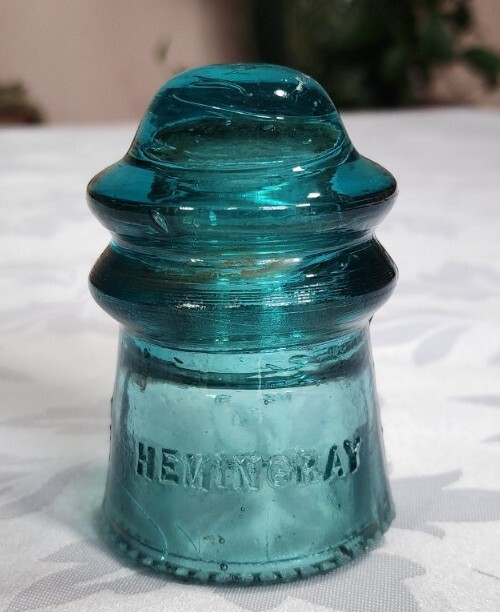
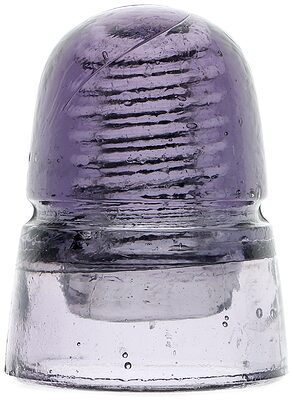
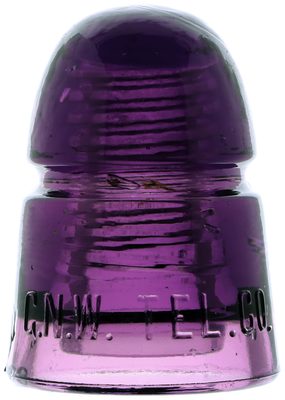
The Birth of Glass Insulators (1840s–1870s)
The telegraph revolution of the 1840s created an immediate need for reliable insulation. Early attempts used wood, porcelain, and even glass bottles — but glass quickly proved superior because it resisted weathering and was inexpensive to mass produce.
One of the earliest patents for glass insulators was issued in 1848. By the 1860s–1870s, production boomed as railroad expansion and telegraph lines stretched across America.
Major manufacturers included:
- Hemingray Glass Company
- Brookfield Glass Company
- Whitall Tatum Company
- CD 145 (Note: CD numbers refer to design classifications used by collectors today.)
By the early 1900s, millions of insulators lined America’s expanding communication network.
Why So Many Colors?
Originally, color didn’t matter — it was simply the natural tint of the sand and minerals used in glassmaking.
Common colors:
- Aqua (most abundant)
- Clear
- Light green
But collectors treasure the rarer hues:
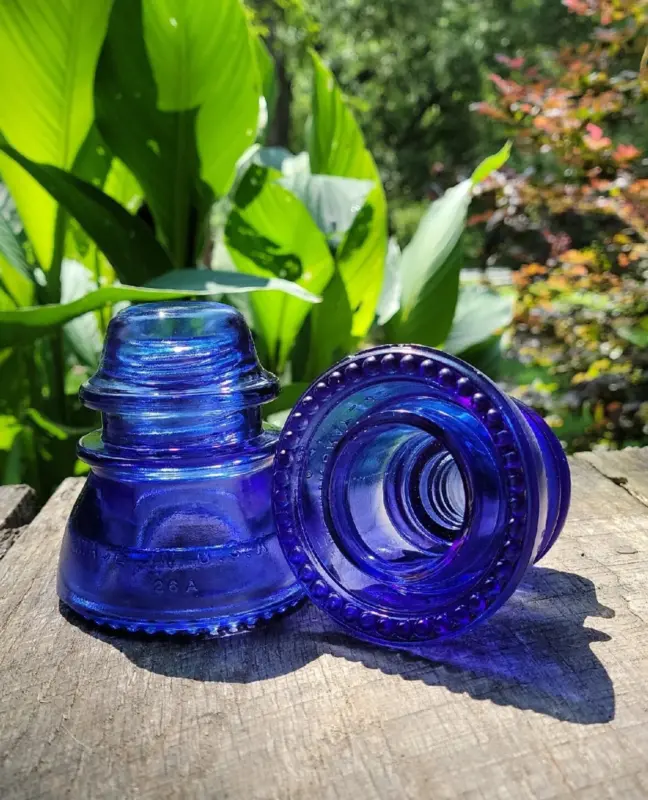
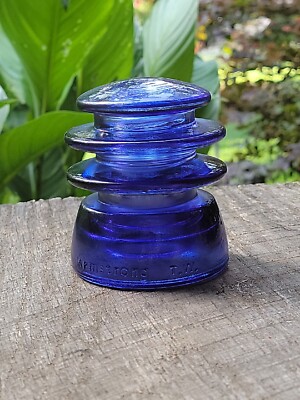
- Deep cobalt blue
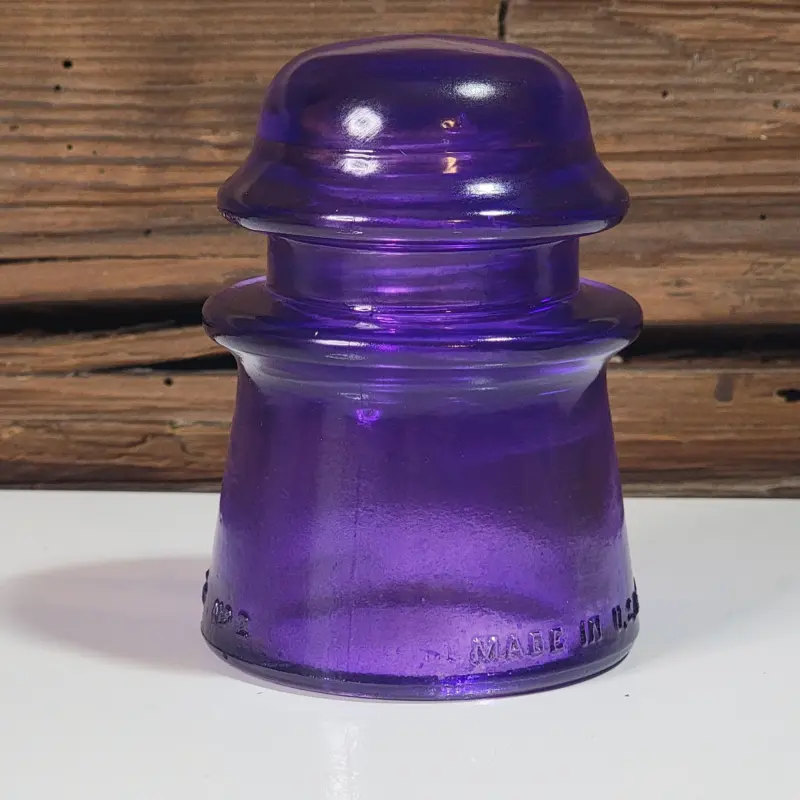
- Purple (often “sun-colored amethyst” caused by manganese reacting to UV exposure)
- Amber
- Teal
- Milk glass
Many purple insulators were originally clear. Over decades of sunlight exposure, manganese in the glass turned them lavender — a natural transformation that now excites collectors.
The Decline of Glass Insulators
By the 1960s–1970s, glass insulators were largely replaced by porcelain and later polymer materials, which were more durable for high-voltage lines.
As communication technology advanced underground, many insulators were removed, discarded, or simply left on abandoned poles — where treasure hunters later discovered them.
What was once industrial scrap became collectible history.
How Collectors Identify Them
Serious collectors use:
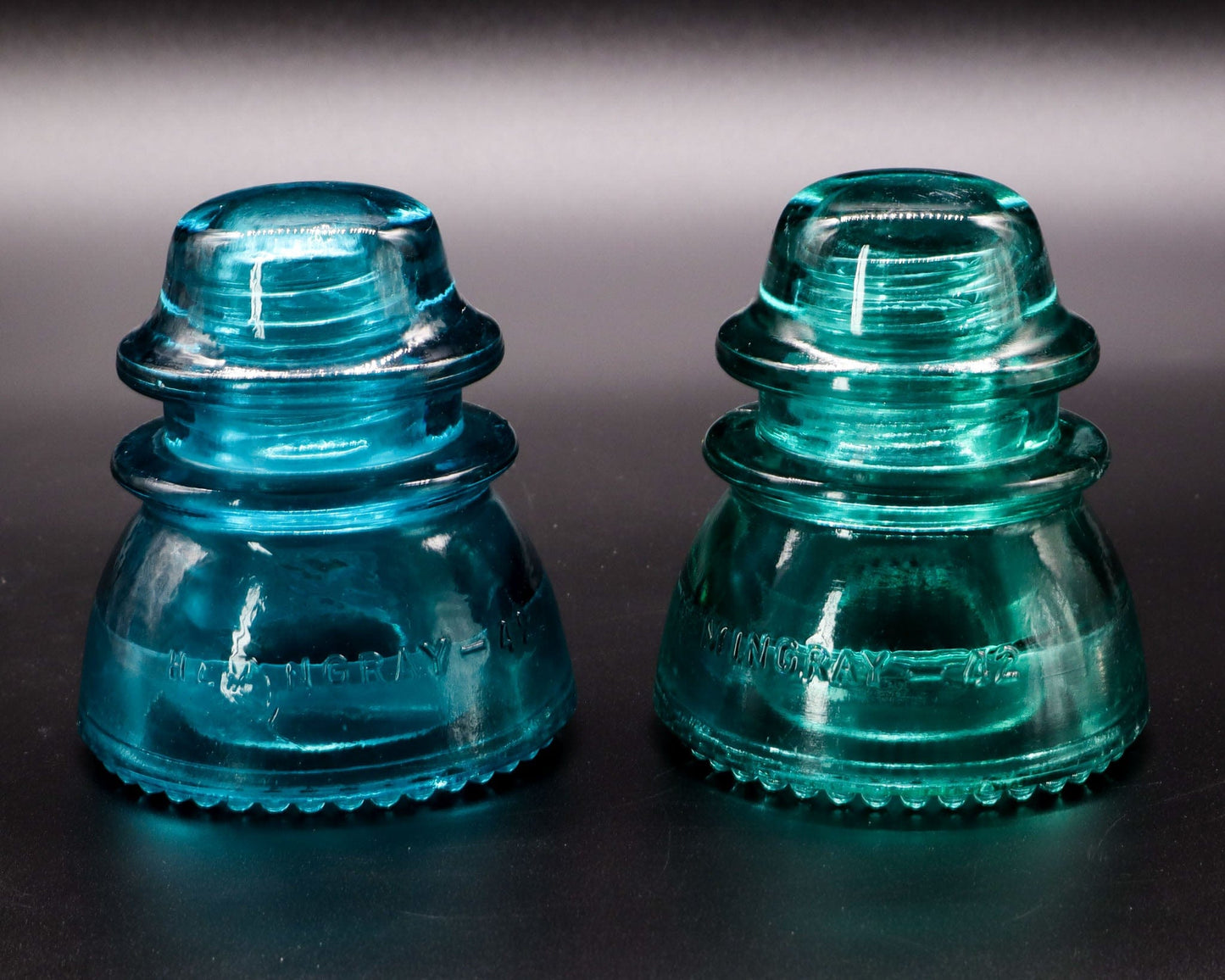
- Embossed manufacturer names (e.g., HEMINGRAY-42)
- Mold numbers
- “CD” (Consolidated Design) numbers
- Base markings
- Color variations
- Condition (chips and wire rub affect value)
The hobby even has its own annual conventions and price guides.
Rarity & Value Guide
Common Insulators
- Aqua Hemingray-42
- Clear examples
Value: $5–$20
These are perfect for décor, fairy light projects, and beginner collectors.
Mid-Range Collectibles
- Light purple (sun-colored)
- Light amber
- Teal shades
Value: $40–$150
Condition matters heavily. No chips = higher value.
Rare & Highly Collectible
- Cobalt blue
- True amber (not sun-altered)
- Deep emerald green
- Unusual CD styles
- Embossing errors
Value: $300 to several thousand dollars**
Rare examples have sold for $10,000+ at specialty auctions.
What Impacts Value?
- Color (rarity is king)
- Condition (chips dramatically lower value)
- Manufacturer
- Age
- CD design number
- Demand trends
Just like fairy lamps and swung vases — color and condition drive the market.
Why They’re Trending Again
Glass insulators are resurging because they:
- Fit beautifully into farmhouse & industrial décor
- Glow when backlit
- Pair well with MCM, rustic, and cottagecore styles
- Offer affordable entry points for new collectors
They are also conversation pieces — and as you know, storytelling sells history.
Decorating with Glass Insulators
Collectors today use them:
- As paperweights
- On stacked book displays
- As candle holders
- In garden settings
- Mounted as pendant lights
They add instant authenticity to vintage spaces.
Final Thoughts
Glass insulators are tiny pieces of American industrial history. They once carried voices across states — and today they carry stories across generations.
From $10 aqua examples to rare four-figure cobalt beauties, they remain one of the most accessible and colorful entry points into antique collecting.
And the best part? Many are still out there waiting to be discovered.