DID YOU KNOW? The History of the L.E. Smith Glass Company
When it comes to iconic American glass, few names spark as much nostalgia—and collector excitement—as the L.E. Smith Glass Company. Best known today for its beloved glass turkey dishes, L.E. Smith’s story is deeply rooted in American manufacturing history, innovation, and timeless design.
Early beginnings in Pennsylvania (1907–1930s)
The L.E. Smith Glass Company was founded in 1907 in Jeannette, Pennsylvania, a region long associated with glass production. The company was established when Louis E. Smith and his associates took over an existing glass decorating operation, eventually relocating to Mount Pleasant, Pennsylvania, which became its permanent home.
In its early years, L.E. Smith focused on practical, everyday glassware—items made to be used, not just displayed. These included tumblers, sherbet dishes, salt and pepper shakers, mustard pots, and kitchen accessories. Some pieces were even filled with condiments and sold through national retailers like Woolworth’s, making Smith glass a familiar presence in American homes.
Beyond tableware, the company demonstrated impressive innovation. L.E. Smith produced headlight lenses for the Ford Model T, sidewalk vault lights, and specialized industrial glass, showing its ability to adapt to changing markets and technologies.
Mid-century expansion and decorative glass (1940s–1960s)
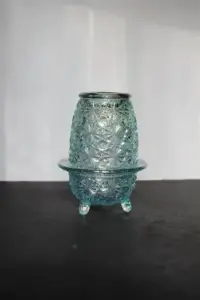
By the 1940s and 1950s, L.E. Smith began shifting toward decorative and giftware, responding to post-war consumer demand. Milk glass became a staple, and the company experimented with bold colors, pressed patterns, and sculptural forms that appealed to the growing mid-century modern aesthetic.
During this era, L.E. Smith also reused and acquired molds from other defunct glass companies, allowing them to continue producing popular patterns while introducing new colorways. This practice would later become a key talking point among collectors distinguishing originals, reissues, and reproductions.
The glass turkey: an American holiday icon
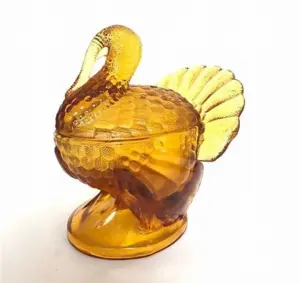
In 1943, L.E. Smith introduced what would become its most famous creation: the glass turkey dish. Designed as a covered serving bowl for soups, gravies, or candies, the turkey quickly became associated with Thanksgiving and fall entertaining.
Produced in colors such as amber, ruby red, clear, green, and the striking amberina (amber fading into ruby), the turkey dish remained in production for decades. Its popularity surged again in the 1980s and dramatically in the 1990s and early 2000s after being featured by lifestyle tastemaker Martha Stewart—cementing its status as a must-have seasonal collectible.
Later examples were marked with an “S” on the base to distinguish authentic L.E. Smith turkeys from similar versions made by other manufacturers.
Later years and closure (1970s–2005)
In 1971, L.E. Smith was acquired by Owens-Illinois and operated as a subsidiary. During this period, the company produced revival carnival glass, commemorative plates, and limited collector pieces aimed at the growing vintage and collector market.
Despite continued interest in its products, rising production costs and changes in consumer buying habits led to the company ceasing operations in 2005. Although the factory briefly reopened under new ownership, large-scale production never resumed.
Why L.E. Smith glass matters today
Today, L.E. Smith glass is highly sought after by collectors and vintage enthusiasts for several reasons:
- Iconic designs, especially the turkey dishes
- Wide color variety, appealing to both decorators and collectors
- Strong ties to American manufacturing history
- Usable beauty, blending form and function
Whether displayed on a holiday table, tucked into a china cabinet, or passed down through generations, L.E. Smith pieces continue to tell a story of American craftsmanship and tradition.
DID YOU KNOW? collector tips
- Earlier pieces may lack markings, while later items—especially turkeys—often feature an “S”
- Color can significantly impact desirability and value
- Revival and reproduction pieces still hold charm but should be identified accurately
- Condition is key: chips, cracks, and repairs affect value
L.E. Smith Glass Company left behind more than glass—it left behind memories, traditions, and a lasting mark on American design history.
Give the Gift of History