💚 The Fascinating History of Jadeite Glass
There’s just something magical about that soft, milky green glow of Jadeite glass… 💫
Whether it’s stacked neatly on a shelf or mixed into a curated vintage kitchen, Jadeite has become one of the most beloved collectibles in the glass world today.
But here’s the twist—this iconic glassware didn’t start as a luxury collectible. It began as everyday kitchenware made for hardworking American households during one of the toughest times in history.
Let’s step back in time…
🏺 The Birth of Jadeite: A Depression-Era Staple
Jadeite glass first appeared in the early 1930s, right in the heart of the Great Depression. At a time when families were stretching every dollar, glass companies stepped in to produce something both affordable and uplifting—a cheerful green glass inspired by the look of precious jade stone.
It wasn’t meant to be fancy.
It was meant to be used, loved, and relied upon daily.
Some pieces were even given away as promotional items in flour sacks, at gas stations, or through grocery store incentives—making Jadeite a true symbol of American resilience and practicality.
🏭 The Makers Behind the Magic
Several glass companies helped bring Jadeite to life, each adding their own touch to this now-iconic collectible.
✨ McKee Glass Company
Often credited as the first major producer (circa 1930), McKee created what collectors call “Skokie Green.”
Their pieces are highly sought after today, especially because many contain trace amounts of uranium—causing them to glow under blacklight.
✨ Jeannette Glass Company
Following closely behind, Jeannette introduced its line in the early 1930s and is credited with coining the term “Jadite.”
Their glass tends to have a slightly softer, lighter green tone and includes a wide variety of kitchen staples.
✨ Anchor Hocking – Fire-King
Perhaps the most recognizable name in Jadeite, Fire-King dominated production from the 1940s through the 1970s.
These pieces were durable, oven-safe, and widely used in both homes and restaurants.
Popular Fire-King patterns include:
- Jane Ray
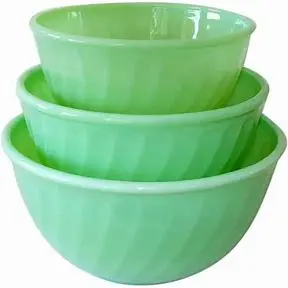
- Swirl
- Restaurant Ware
These are often the gateway pieces for new collectors—and still highly collectible today.
✨ Other Notable Makers
- Westmoreland Glass
- Fenton (limited involvement, mostly later decorative pieces)
- Modern reproductions (important for collectors to recognize!)
🍽️ Styles That Defined a Generation
Jadeite wasn’t just pretty—it was practical.
You’ll commonly find:
- Mixing bowls (a collector favorite!)
- Measuring cups
- Canister sets
- Dinner plates and mugs
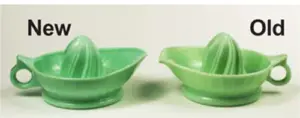
- Citrus reamers
- Refrigerator dishes
Restaurant ware pieces are especially prized for their thicker glass and durability, originally made for diners and commercial use.
💎 Rarity, Value & What Collectors Look For
Not all Jadeite is created equal—and that’s where the thrill of the hunt begins 👀
🔍 What Makes Jadeite Valuable?
- Age: Pre-WWII pieces tend to be more valuable
- Manufacturer: McKee and early Jeannette pieces are highly desirable
- Rarity of form: Unique shapes or limited production items
- Condition: Chips, cracks, and utensil marks can significantly impact value
- Color tone: Deep, rich green often commands higher prices
💰 Current Value Ranges (Market Trends)
- Common pieces: $10 – $75
- Mid-tier collectibles: $100 – $500
- Rare finds: $1,000+
- Exceptional pieces: $5,000+
As always, condition and demand play a huge role—especially in today’s booming vintage glass market.
⚠️ Collector’s Corner: Real vs. Reproduction
With popularity comes reproductions—and Jadeite is no exception.
Here’s how to spot authentic vintage pieces:
✔ Look for maker’s marks (McK, Jeannette “J,” Fire-King stamp)
✔ Check the weight and thickness—older pieces often feel heavier
✔ Use a blacklight: early Jadeite (especially McKee) may glow due to uranium
✔ Study the color—modern reproductions can appear too bright or too uniform
Knowledge is power in this market—and it protects your investment 💚
🌟 Why Jadeite is More Popular Than Ever
Jadeite saw a major resurgence in the 1990s, when collectors and designers began showcasing it in kitchens again—most notably, lifestyle icon Martha Stewart helped bring it back into the spotlight.
Today, Jadeite sits at the crossroads of:
- Vintage collecting
- Farmhouse décor
- Mid-century design
- Functional nostalgia
It’s one of the few collectibles that is both display-worthy AND usable.
💚 DID YOU KNOW? Fun Fact
Some early Jadeite glass contains uranium, which causes it to glow bright green under ultraviolet light—making your vintage kitchenware not just beautiful… but a little bit electrifying! ✨
🛍️ Final Thoughts from The Vintage Shack®
At The Vintage Shack®, we believe every piece tells a story—and Jadeite tells one of resilience, innovation, and timeless beauty.
Whether you’re a seasoned collector or just starting your journey, Jadeite is one of those treasures that never loses its charm.
So next time you spot that signature green glow…
you just might be holding a piece of American history 💚
_______________________________________________________
📚 References & Sources
Books (Highly Trusted Collector References):
- Skelly, Joe. Jadeite: An Identification & Price Guide. Schiffer Publishing, 2002.
- McCarthy, Monica. Collector’s Encyclopedia of Jadeite Glass. Collector Books, 2005.
- Mauzy, Gene & Cathy. Mauzy’s Depression Glass: A Collector’s Guide. Mauzy Publications.
- Florence, Gene. Kitchen Glassware of the Depression Years. Collector Books.
Glass Company & Historical Resources:
- Anchor Hocking Company – Fire-King production history and product lines
- Jeannette Glass Company – Early Jadite production and naming
- McKee Glass Company – First Jadeite (“Skokie Green”) production
Online Reference Sources (General History & Identification):
- The Corning Museum of Glass – Glass history, materials, and manufacturing techniques
- National Depression Glass Association – Patterns, manufacturers, and collector guidance
- Real Or Repro – Reproduction vs. original identification guides